 Endless runner · Reviewed by Priya N. & Callum R.
Jester Loop 9.1 / 10 — Editors' Pick
Most endless runners are honest about one thing: they go forward. Jester Loop does not. Its track is a closed ribbon, and every lap you complete leaves your stumbles behind as physical obstacles — a dropped bell here, a banana-yellow cap there. By lap five the course is a museum of your own mistakes, and the game quietly becomes a memory exercise wearing a runner's costume.
The input model is a single tap with a hold for the cartwheel dodge, and the animation on that cartwheel deserves its own paragraph: a full-body flourish that lands the jester exactly one tile-width away, every time, readable at any speed. Because the loop is fixed, skill expression comes from routing around your accumulated clutter rather than from reflex alone — a genuinely fresh idea in a genre that rarely has any.
Sessions run three to four minutes, there is nothing to buy and nothing to wait for, and the weekly "clean slate" event resets the loop for a global leaderboard based purely on laps completed. It is the best pure-play runner we have covered since this digest began, and the joker is not decoration — he, and his mess, are the entire game.
"The rare runner where dying makes the game more interesting."— Priya N.
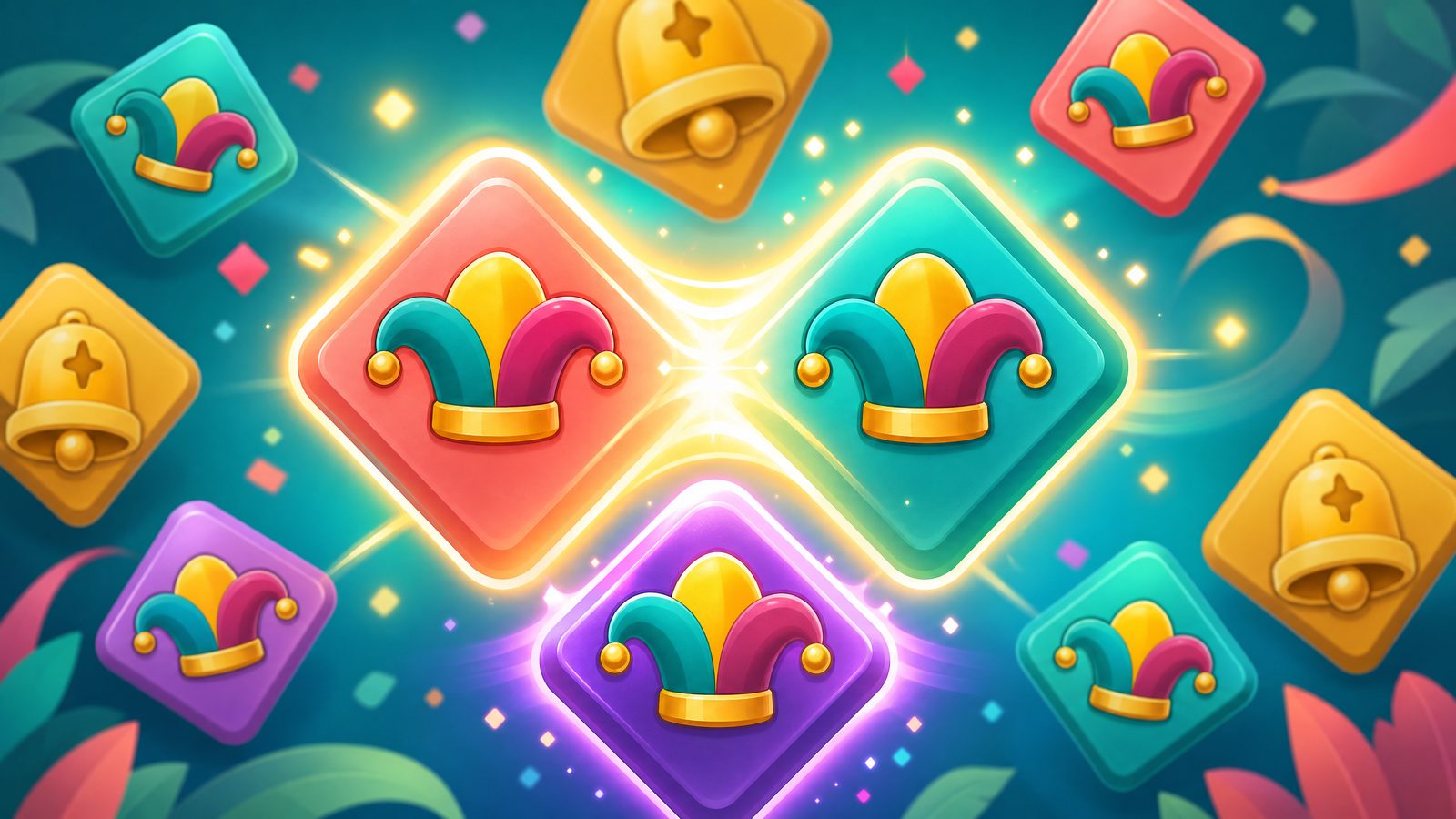 Merge puzzle · Reviewed by Margot D. & Priya N.
Motley Merge 8.4 / 10
Merge games live or die by their chains, and Motley Merge's chain is delightful: bell into cap, cap into collar, collar into full motley, motley into a tiny dancing jester who bows and clears his whole row. The loop would be pleasant but unremarkable if not for the wandering joker tile — a stubborn little wildcard that refuses to merge and hops one square each turn.
Trapping him is the real puzzle. Corner him with three matching tiles and he surrenders, transforming into whatever completes your biggest chain. Handled poorly he shoves your neat rows apart at the worst moment. It is herding, essentially, and it gives every one of the 140 boards a small narrative arc: chaos, pursuit, capture, cascade.
Hints are free and unlimited after thirty seconds of inactivity, which tells you everything about the design's confidence. A few late boards recycle earlier layouts with tighter space rather than new ideas, which is the only reason the score is not higher.
"The first merge game in years where I laughed out loud at a tile."— Margot D.
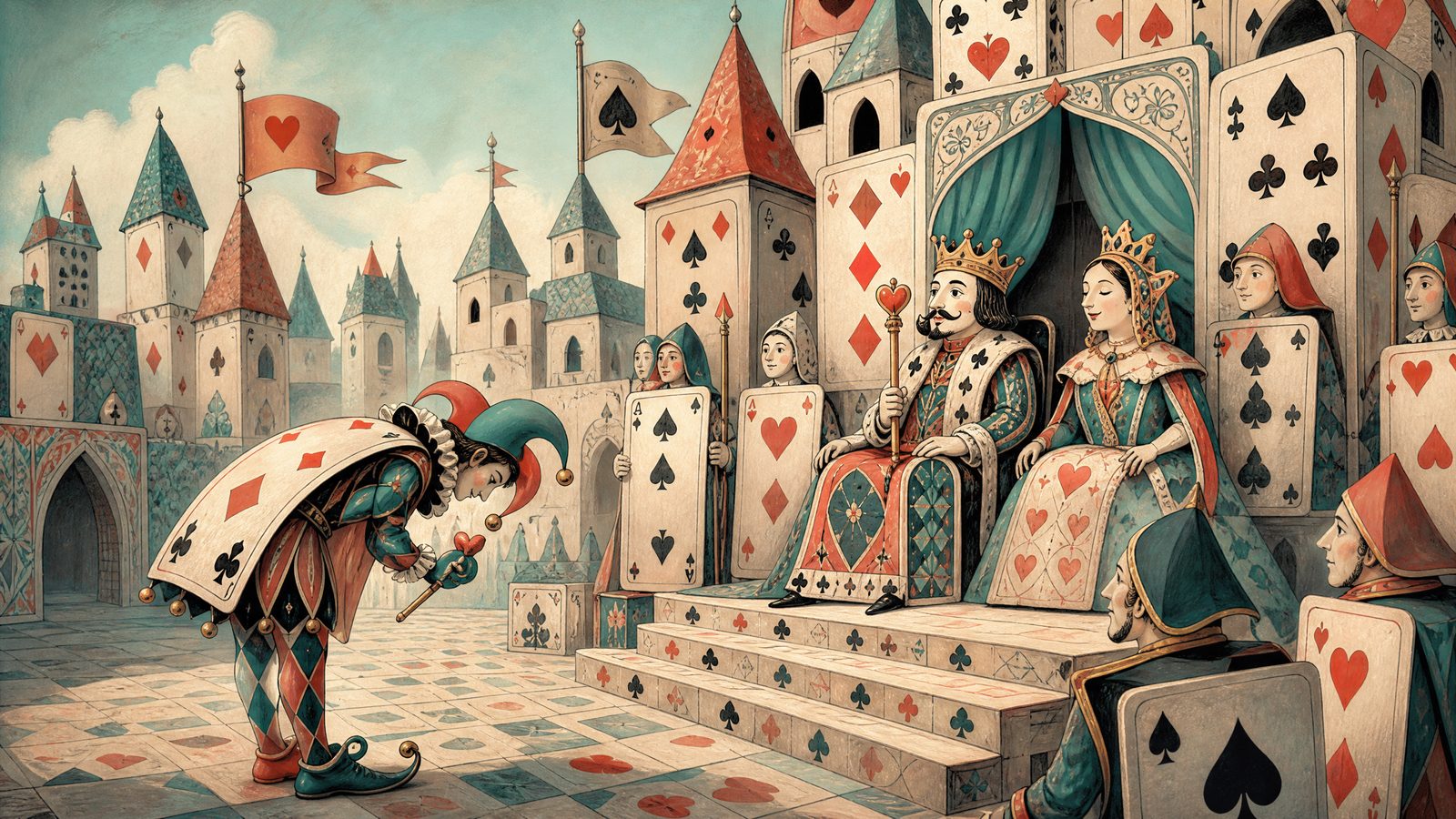 Card strategy · Reviewed by Callum R. & Margot D.
Court of Cards 8.8 / 10
You are assembling a royal court, one card per turn, from a shared river of nobles, guards and scholars. Each courtier scores off their neighbours — guards flank, scholars pair, nobles demand distance from each other — so far, so familiar for anyone who has touched a tableau-builder. Then the jester arrives, uninvited, at the end of every round, and reassigns exactly one courtier to a new role of his choosing.
That single rule rescues the game from solvability. You cannot lock in a perfect court; you can only build one that fails gracefully when the fool meddles with it. Planning for sabotage turns out to be far more interesting than planning for success, and the 60-level campaign keeps finding new ways to weaponise the little man — levels where he copies your best card, levels where he swaps allegiance mid-round, one glorious level where there are three of him.
The storybook art, all cut-paper castles and patient pastel suits, is the most handsome thing in this issue. Sessions are five to eight minutes. Our only complaint is a difficulty dip around levels 38–44 that a patch could fix tomorrow.
"Light enough for a lunch break, deep enough to argue about at dinner."— Callum R.
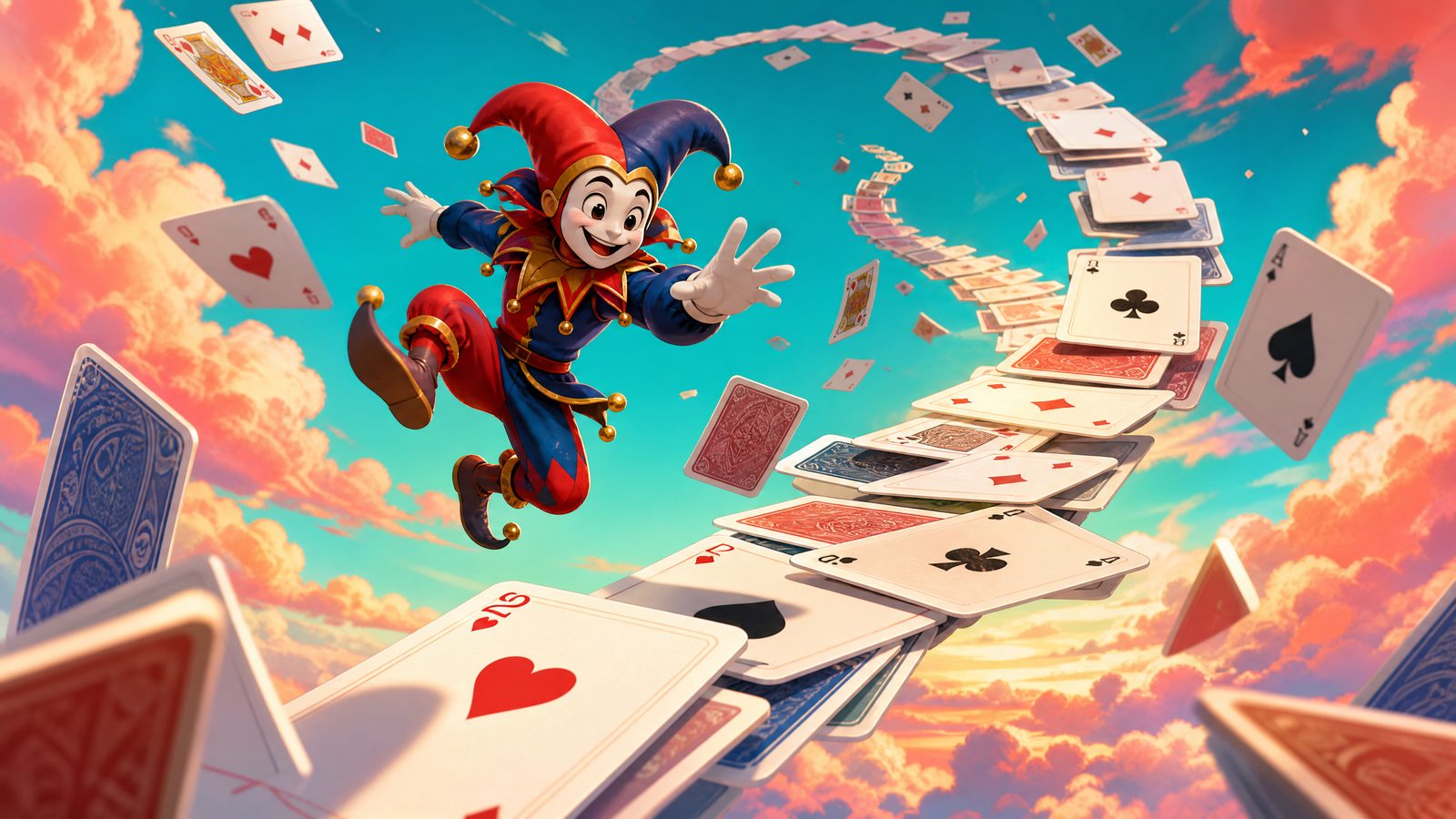 Arcade platformer · Reviewed by Priya N. & Callum R.
Wild Shuffle Run 7.6 / 10
The pitch is irresistible: you sprint across bridges of floating playing cards, and mid-jump the deck shuffles. The card you aimed for might land as a spade platform, a heart trampoline or — if the joker cuts the deck — vanish entirely, leaving his grinning face where your footing used to be. The first hour of this game is pure delight, a slapstick trust exercise between you and probability.
The sunset art direction carries enormous charm, and the shuffle sound — a real riffle, recorded close — is weirdly luxurious. But the back third of the campaign forgets its own joke. Instead of deepening the shuffle mechanic, it simply speeds everything up, and a game about reading chaos becomes a game about twitch reactions. Checkpoints stay generous, so frustration never curdles, but the wit drains out.
Worth your time for the first two worlds without reservation. We hope the developers remember which half of their game was the clever half.
"Brilliant comedy that eventually mistakes speed for humour."— Priya N.
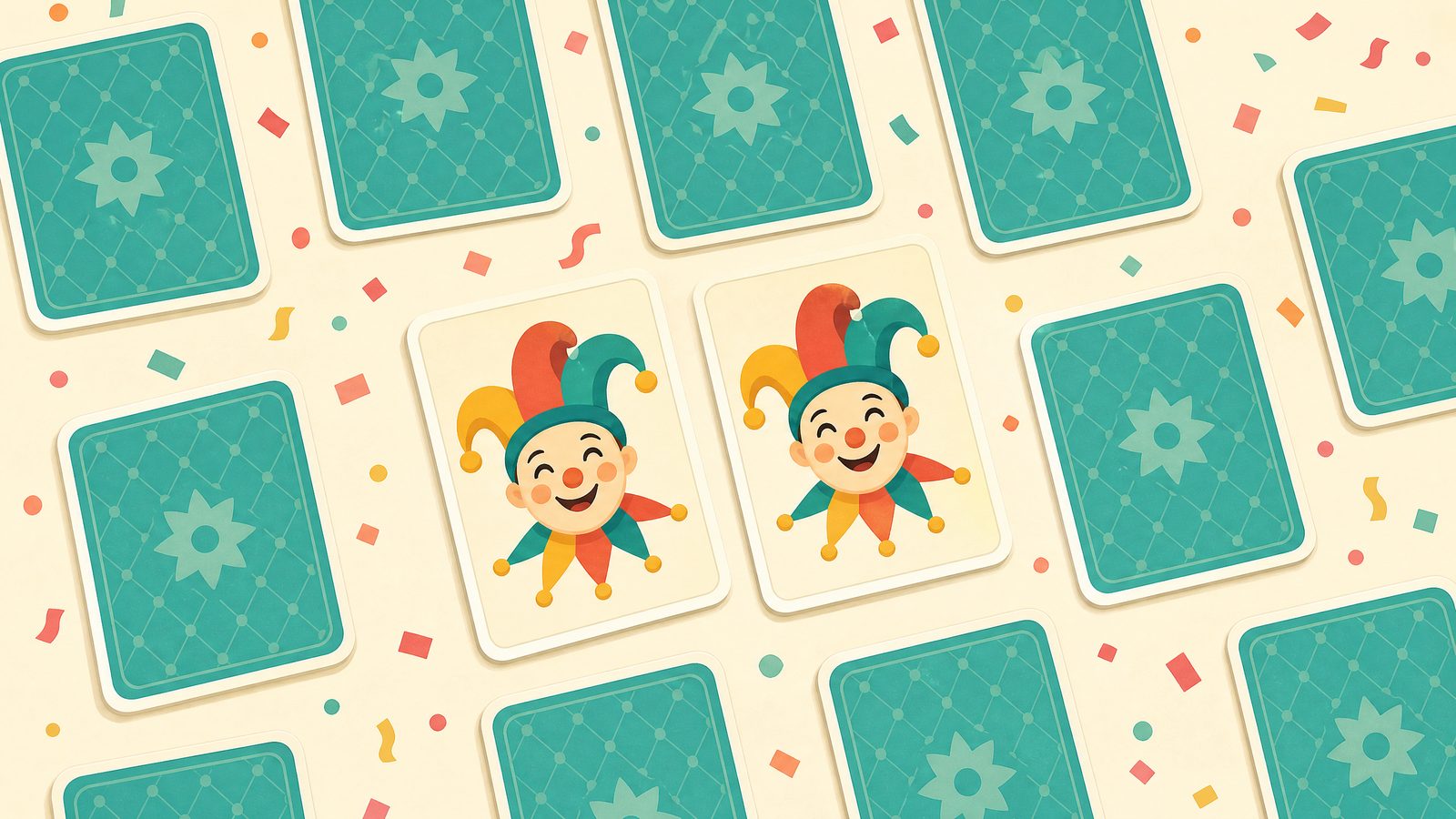 Memory / family · Reviewed by Margot D. & Priya N.
Punchline Pairs 8.0 / 10
A pairs game with a script. Every jester card carries half a joke — flip his twin and the pair performs the whole bit, complete with a rimshot from an offscreen drummer who is having a wonderful time. The jokes are proper groan-out-loud material, family-safe and mostly Australian in sensibility (one running gag about a magpie in a hard hat had our office in pieces).
Mechanically it is honest pairs with one wrinkle: matched jesters take a bow and then swap two other face-down cards on their way off stage, so the board you memorised is never quite the board that remains. That gentle sabotage keeps adults engaged while staying fair for the seven-year-olds the pass-the-phone mode is clearly built for.
One hundred and twenty jokes ship in the box, with a free seasonal pack promised. If the writing stays this sharp, this becomes the default long-car-trip game for Australian families.
"The only memory game I have ever replayed for the script."— Margot D.